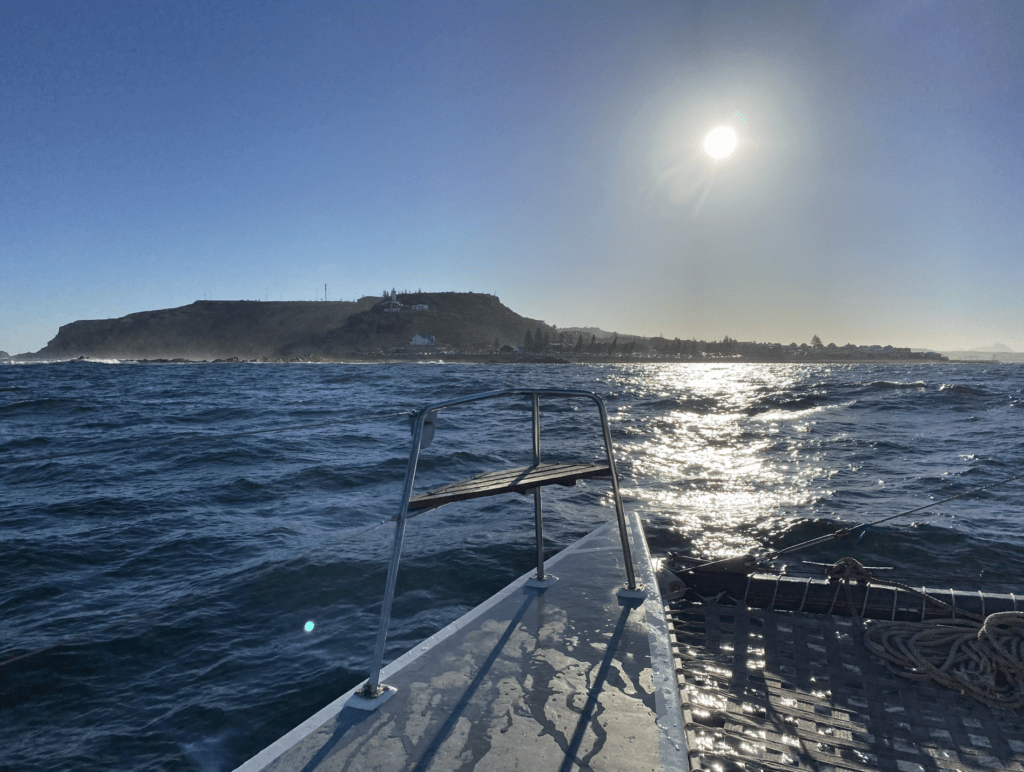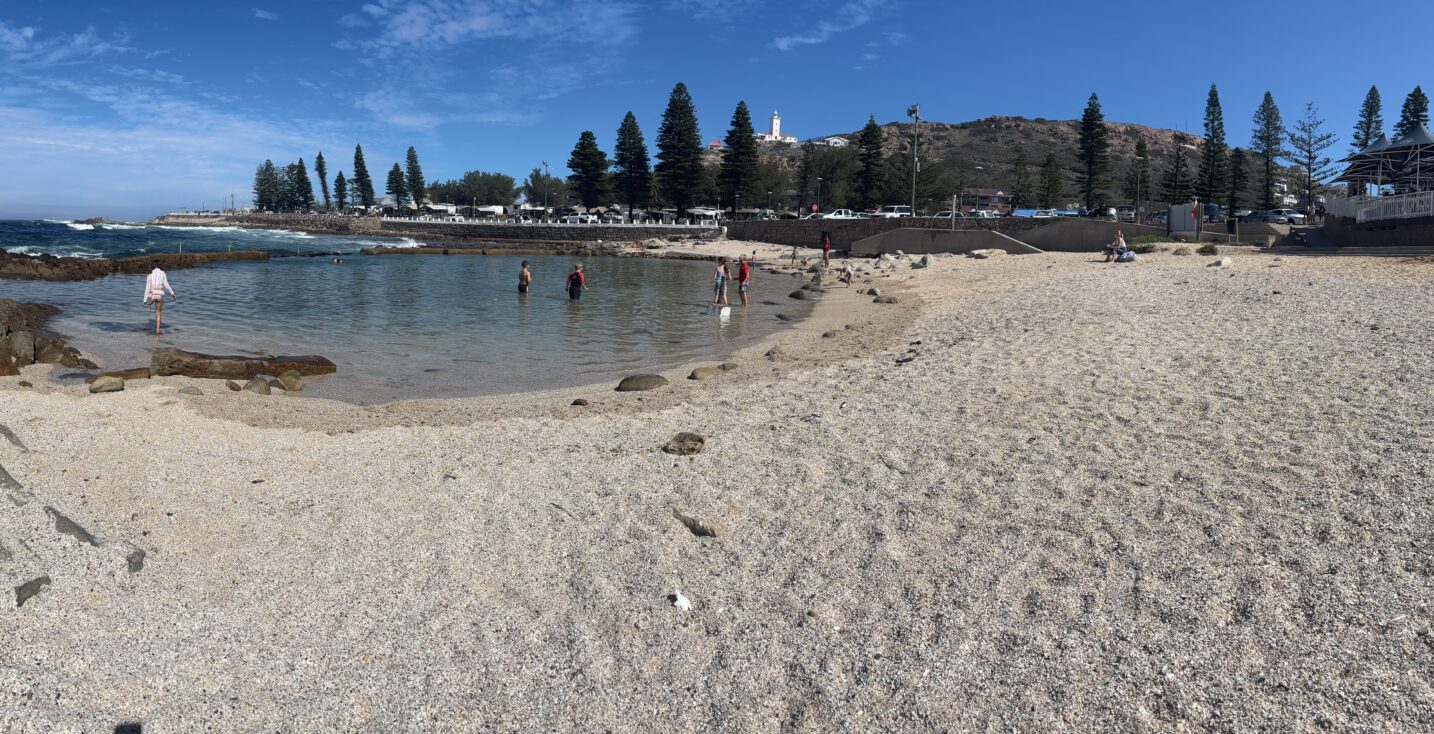
Beaches in and around Mossel Bay

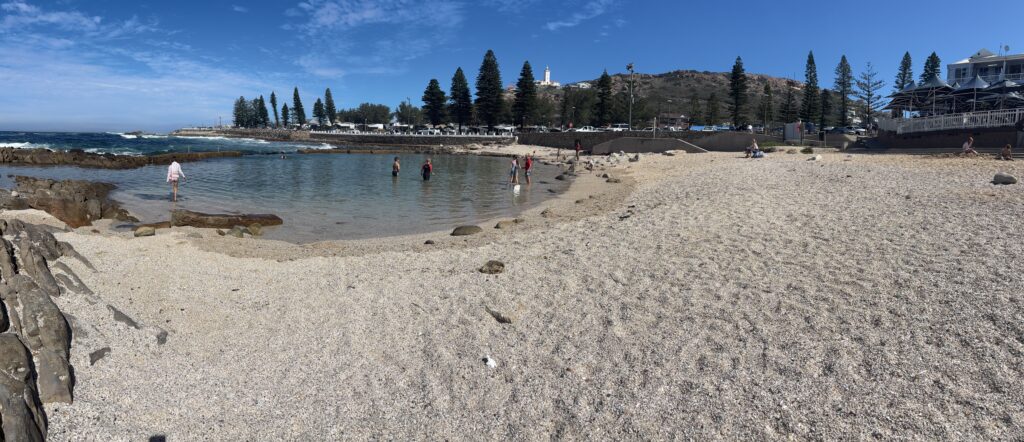
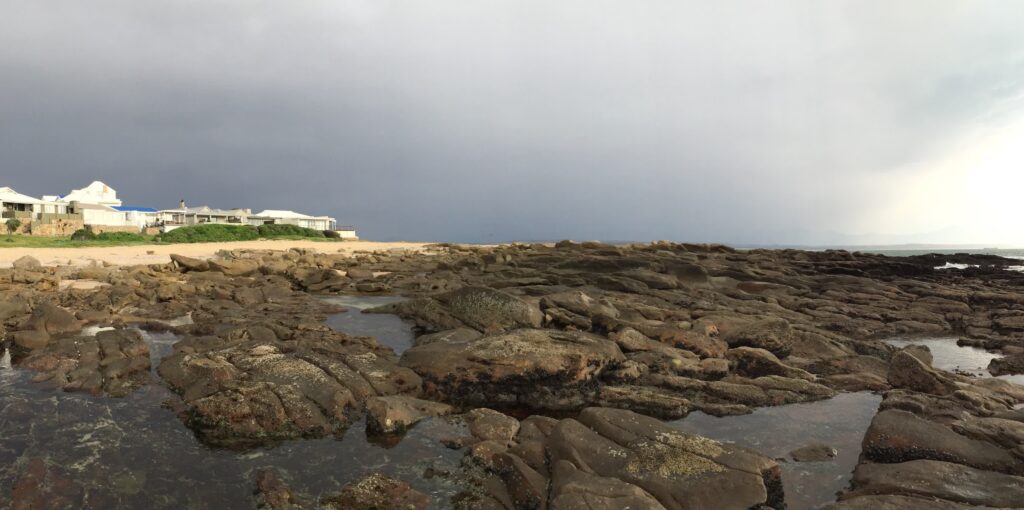
Mossel Bay’s beaches stretch across roughly 60 km of sandy shoreline on South Africa’s Garden Route, offering year-round beach weather plus swimming, surfing, fishing, walking, and whale-watching opportunities.

Standout stretches

Several hold (or have held) Blue Flag status for cleanliness, safety, and environmental standards—typically including De Bakke, Hartenbos, Klein Brakrivier (Little Brak), Glentana, and often Santos.

  • Santos Beach sits right in town: wide, sandy, and convenient to shops, restaurants, and historic sites. It is family-friendly with relatively sheltered swimming (lifeguards in peak season), gentle surf suitable for beginners or longboarding, rock pools, and frequent dolphin or whale sightings.
  • Diaz Beach is another popular family option with soft sand, a safe swimming area, and the nearby Diaz Water Park for slides and rides. It also draws beginner-to-intermediate surfers.
  • De Bakke is smaller and quieter—a sheltered cove with calm, warmer water ideal for kids, plus flanking reefs that support snorkelling and fishing.
  • Hartenbos Beach offers a long, pristine white-sand stretch with good amenities, wheelchair access, and easy links to a waterpark and lagoon activities.
  • Klein Brak (Little Brak River) features golden sand perfect for walks, a river mouth suited to canoeing, waterskiing, or fishing, and solid whale-watching in winter.
  • Glentana provides another Blue Flag sandy stretch a bit further along the coast. Dana Bay is better for long scenic walks and whale spotting than swimming (dangerous currents—swimming is prohibited).

Practical notes

Lifeguards operate seasonally on main beaches—always swim between the flags and at your own risk elsewhere. The Point area adds rock pools and more advanced surf breaks. Winter (roughly May–October) brings southern right whales close to shore along this stretch of the Whale Route.

Whether you want a lively town beach, a quiet family cove, or kilometres of sand for a solitary stroll, Mossel Bay delivers an accessible, scenic coastal escape. Pack sunscreen, respect local rules (including dog restrictions and no alcohol on beaches), and leave only footprints.
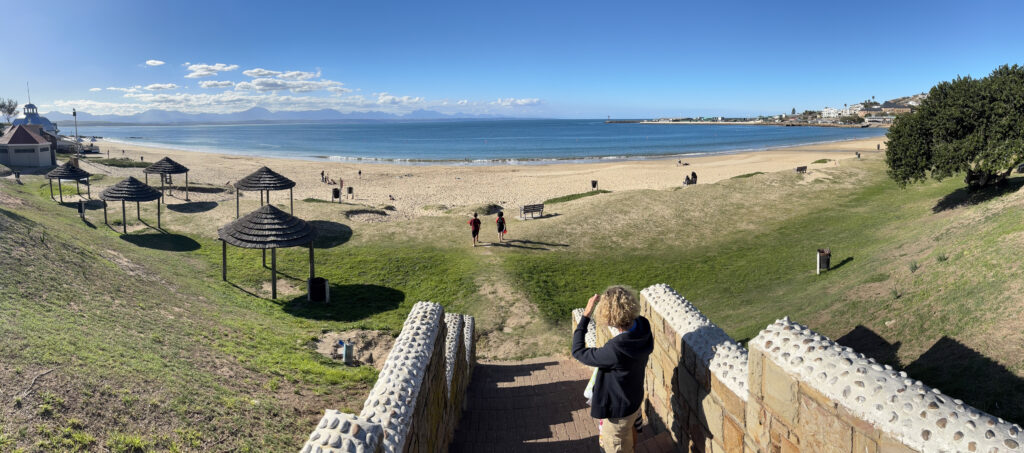
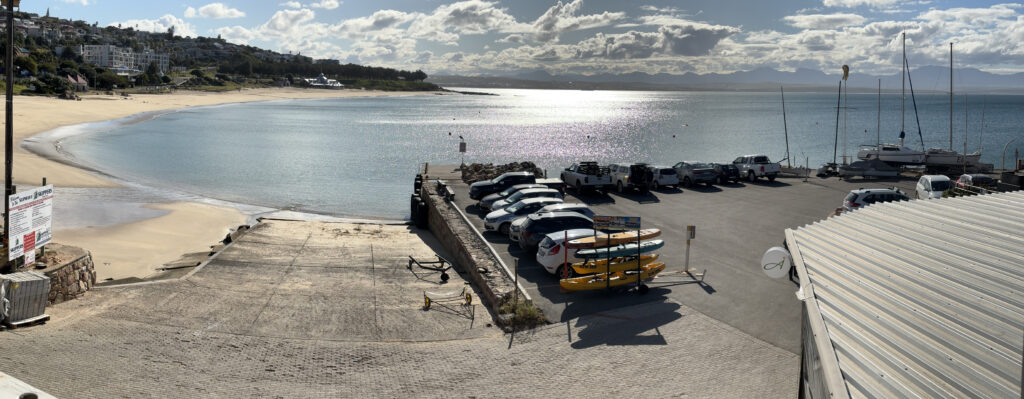
Whale watching in Mossel Bay

If you’re in Mossel Bay between July and October, you’re in for a real treat — this is one of the best spots along the Garden Route for whale watching.

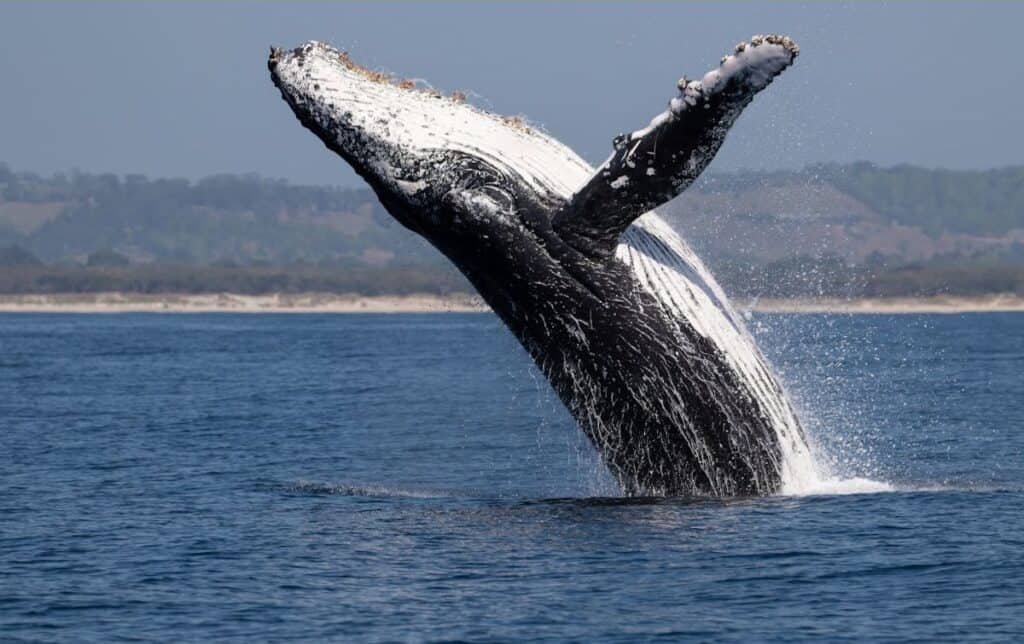
Southern Right whales come up from Antarctic waters around this time to calve and nurse in the calm, shallow bay. September and October are usually the peak months. You’ll also sometimes see Humpbacks, Bryde’s whales, and the odd orca.

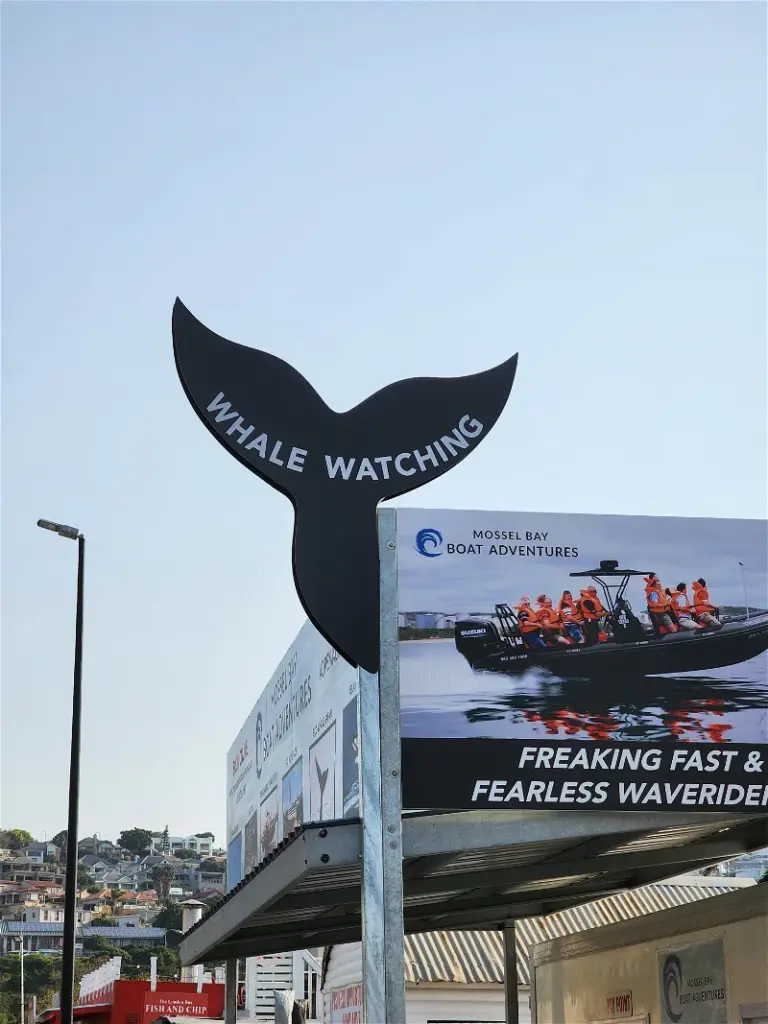
The easiest way to get close is on a boat trip from the harbour. Most tours last about 45 to 90 minutes and take you right out to where the whales are. You often get to see breaches, tail-slaps and spy-hops, and many of the boats stop at Seal Island as well so you can watch the Cape fur seals. Dolphins and the occasional shark pop up too.

If you’d rather stay on dry land, you can still see plenty. The Point, the St Blaize Lighthouse and Dana Bay are all good spots for land-based viewing.

It’s a really accessible and ethical way to see these gentle giants. Just book with a licensed operator and you’ll have one of the most memorable experiences the coast has to offer.

Mossel Bay Sea Gallery

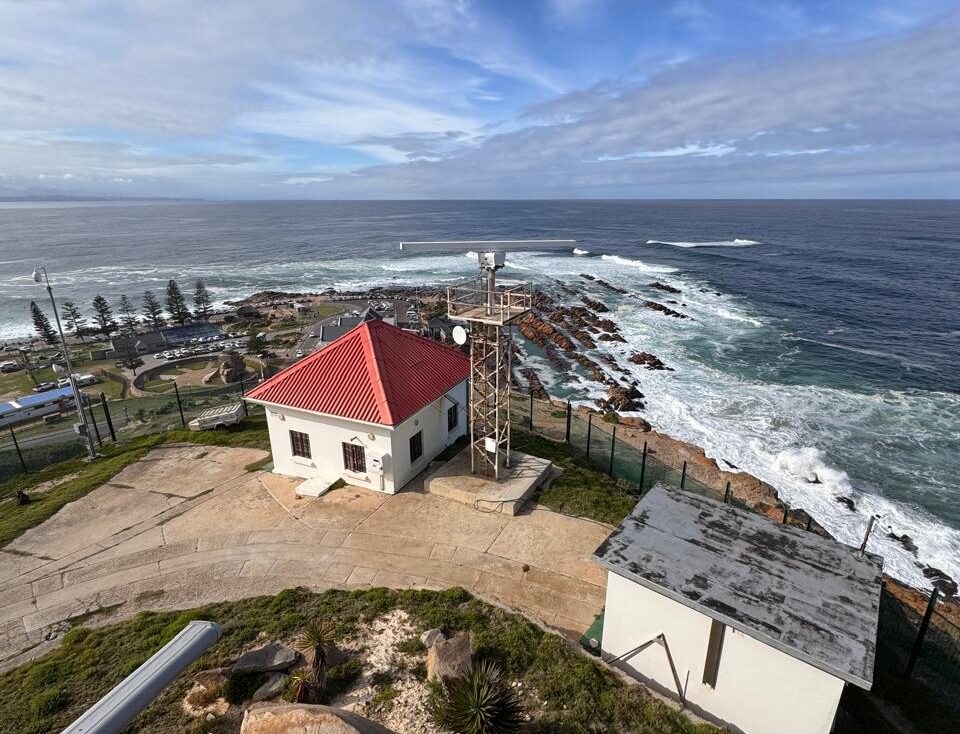
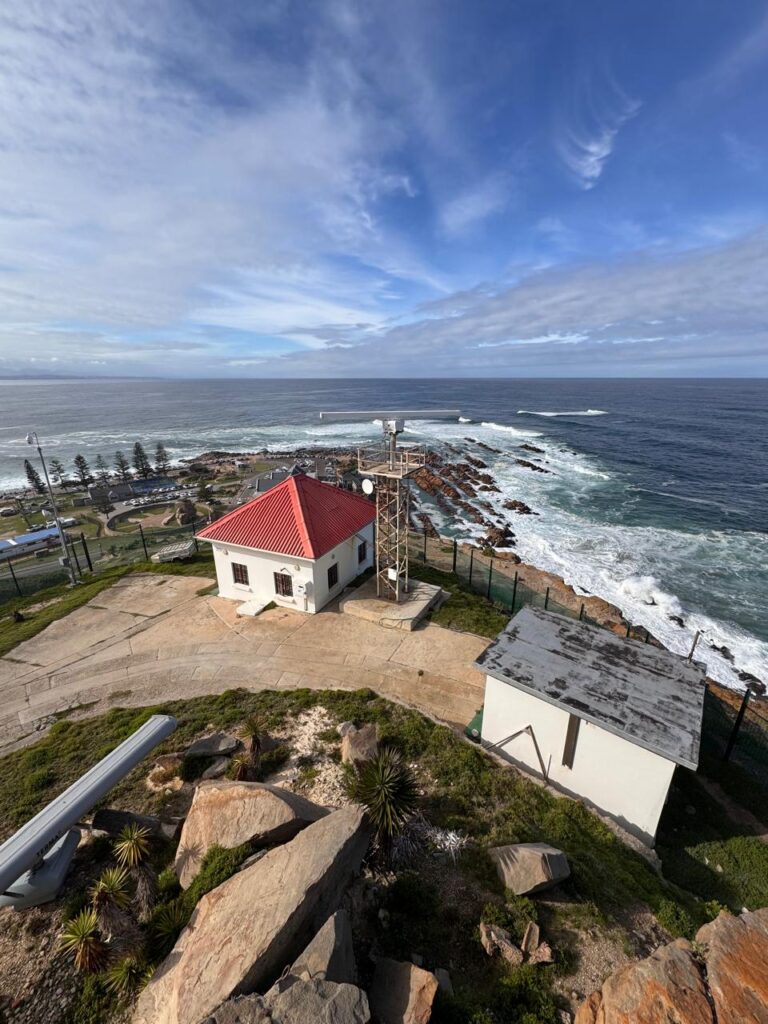
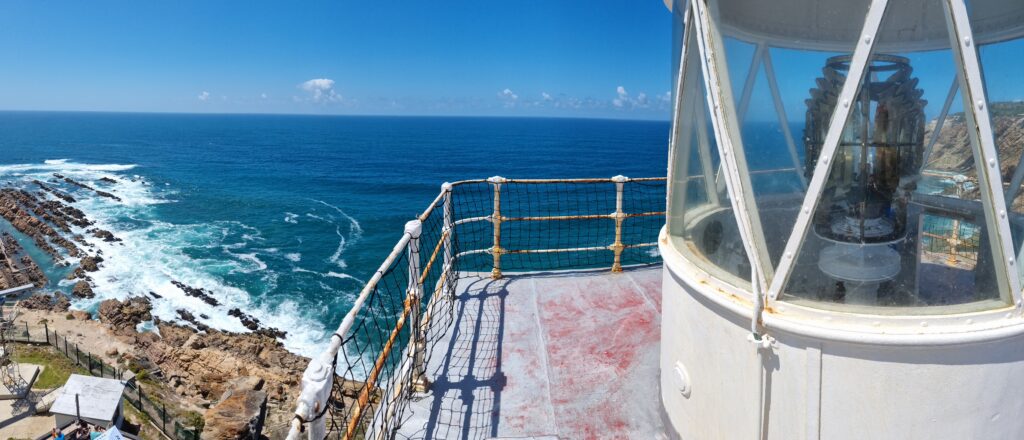
If you head up to the cliffs at Cape St Blaize, you’ll find this lovely old white square lighthouse looking out over Mossel Bay. It’s been guiding ships safely past since 1864 and still makes a really striking landmark.

The story of the place goes back much further. In 1488 the Portuguese explorer Bartolomeu Dias rocked up here on the feast day of São Brás (Saint Blaize) and named the bay Aguada de São Brás — the Watering Place of St Blaize. The Dutch later changed it to Mossel Bay because of all the mussels they found.

The lighthouse itself was built a bit later. Construction started in 1862 after the local authorities raised the money through harbour dues (the British government had turned them down). John Goodman built the 14-metre brick tower on solid rock, and it was first lit on 15 March 1864 with a fixed red light that could be seen for about 15 nautical miles.

These days it’s still fully operational, standing 73 metres above sea level with a modern white light that flashes out to 25 nautical miles. It’s a National Monument now and a popular spot for visitors — the views over the ocean are fantastic. Whether you’re a sailor or just someone exploring the Garden Route, it’s still a proper beacon.

The Dias Caravel (Replica Ship)

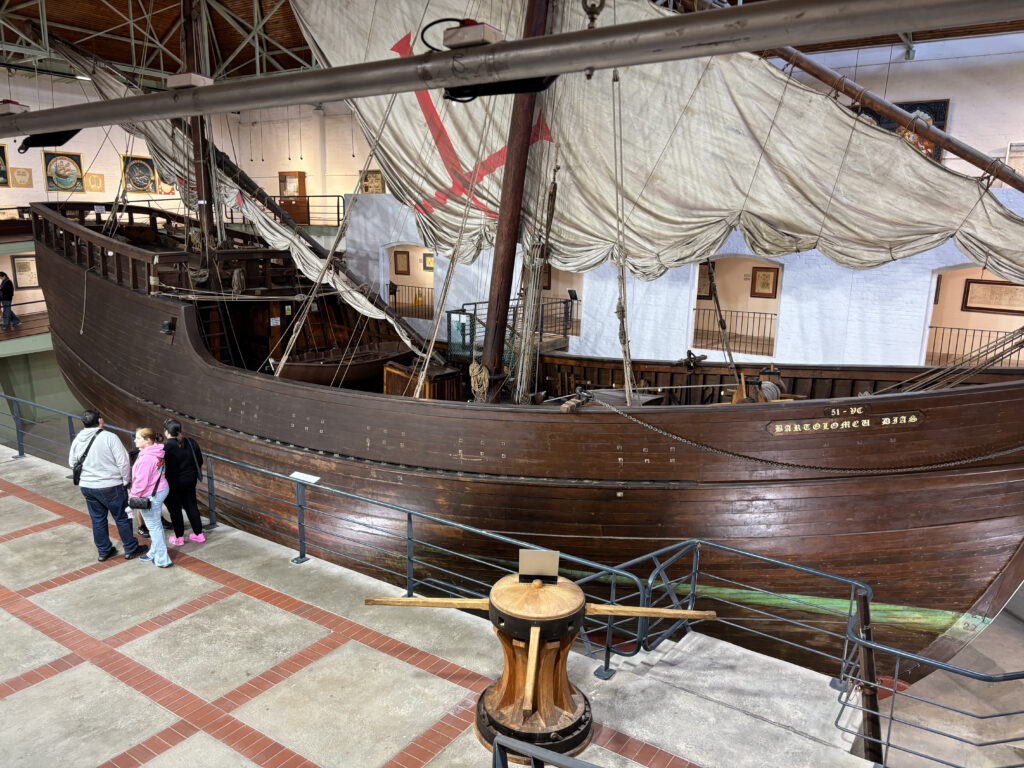
Right in the middle of the Bartolomeu Dias Museum Complex you’ll find a life-size replica of the little Portuguese caravel that Bartolomeu Dias sailed into Mossel Bay in February 1488 — the first European ship ever to reach South African shores.

They built this wooden ship in Portugal and sailed it all the way here in 1988 to celebrate the 500th anniversary of that voyage. It’s about 23.5 metres long with those distinctive lateen sails, and these days it sits indoors in the Maritime Museum.

You can actually walk around on the cramped decks and into the quarters, which gives you a real feel for just how tough those early ocean crossings must have been.

It’s still one of the most popular things to see in Mossel Bay — a lovely way to connect the town’s maritime past with its present as a Garden Route favourite.

There’s something really special about seeing Mossel Bay from the water. If you fancy getting out on the bay, you’ve got two lovely options that feel quite different from each other.

Kiyana is the spacious 40–42 ft catamaran that a lot of families and groups love. She’s nice and stable, so the day trips and sunset sails around Seal Island are really comfortable. You’ll usually see seals lounging on the rocks, and dolphins often come by too. On warmer days there’s even a chance to have a swim — it’s a relaxed, social way to enjoy the bay.

If you’d rather have a more traditional sailing feel, Sailing Voyager is the only mono-hull yacht operating here. Her classic design gives you proper sailing performance and a more intimate experience. The Seal Island trips and sunset cruises on Voyager feel pure and hands-on — just you, the wind and the water.

Both boats leave from Mossel Bay Harbour and let you see the dramatic coastline, the marine life and that beautiful golden light from a completely different angle. Whether you go for the easy comfort of the catamaran or the authentic yacht experience, a few hours out on the water is one of the nicest ways to really connect with Mossel Bay.